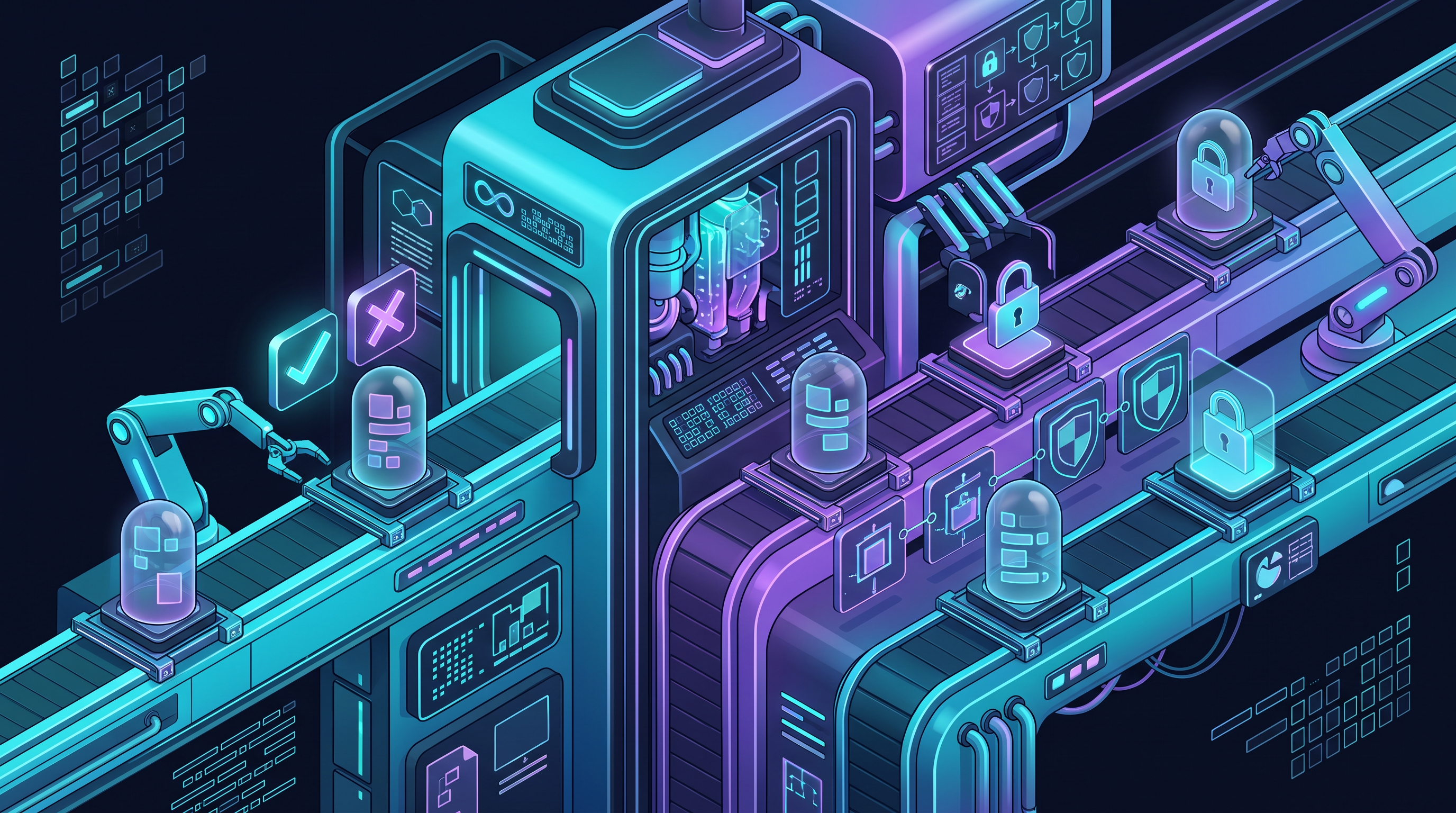
Bounded authority
Autonomy you earn into — the risky class of action always waits for you.
- Routine bounded actions can proceed
- Large blast-radius actions pause for a decision
- The exception boundary is explicit
How it works
The app is only as good as the spec, and the spec is only as good as the questions we ask.
The starting point
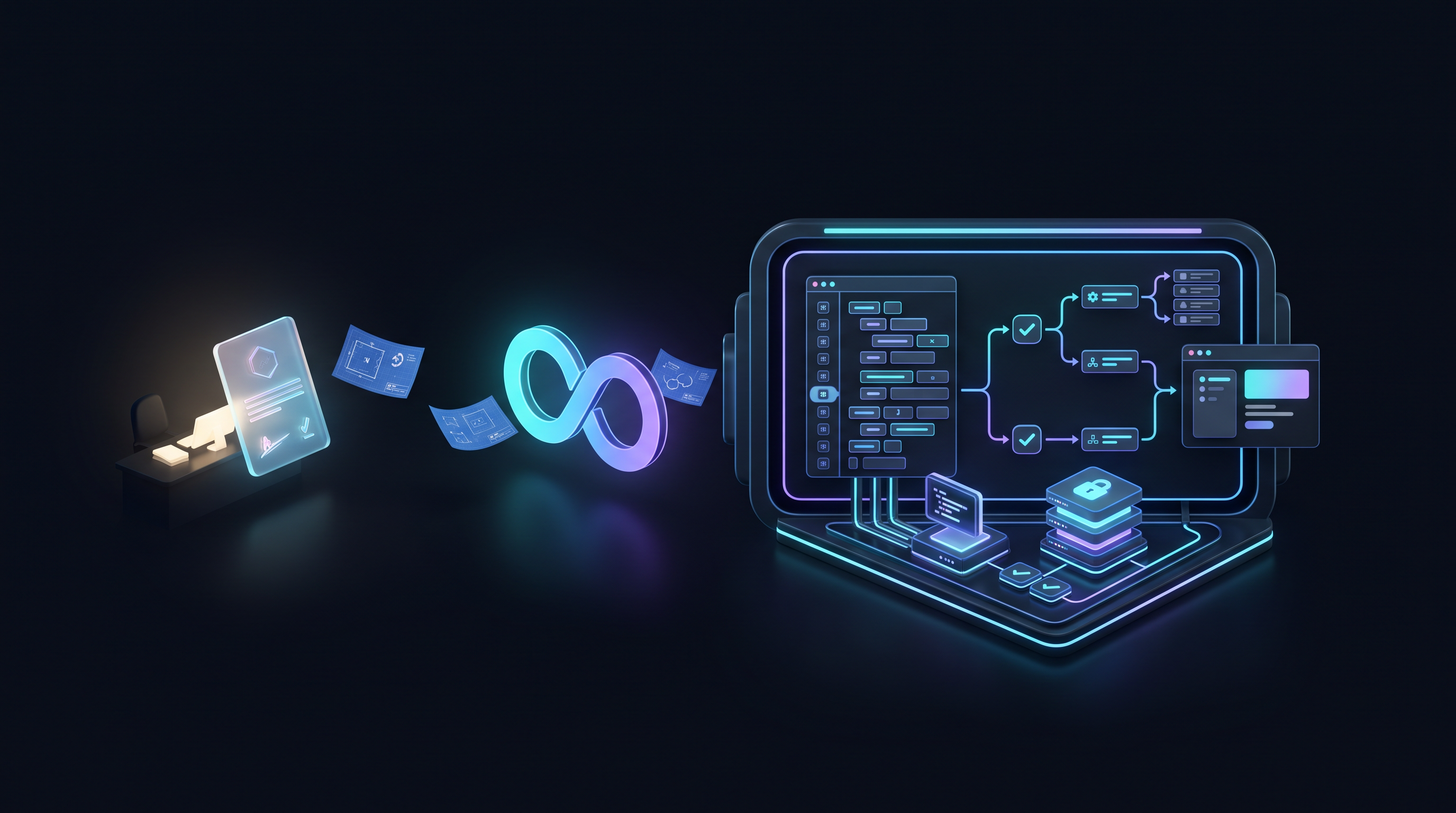
The Factory turns a product outcome and approved specification into a verified live product. Forge continues the practice when the product is already in your repository.
The conductor
After an approved build specification, autonomous operations carry the routine path forward. The goal is less operational sprawl while keeping unusually large blast-radius decisions visible and intentional.
Autonomy you earn into — the risky class of action always waits for you.
Human strategic oversight is structural, not an afterthought.
Most systems alert you when something breaks. Ours alerts you when it goes quiet.
Mission Control MCP
You do not need to configure anything here. This short visual story shows what OCNexus gains from Mission Control MCP: a place to start work, see its progress, and check the landing.
Self-serve Starter and Pro plans are on Pricing. External OCNexus MCP access is still being hardened.
The Factory, in motion
1 of 3 — Approved outcome. An approved product outcome enters The Factory.
Illustrative story
Outcome → spec
A plain-language outcome becomes an interview for the gaps, then a structured specification and a confirmation card. You can see what will and will not be built before work begins.
Review gate
A writer produces the implementation. A separate reviewer checks it before it lands. Two perspectives protect the quality of a single result.
The Factory
The Factory turns an approved product outcome into a complete SaaS: database, backend, frontend, and live URL. Its detailed lifecycle now has its own place.
Provisioning rails
Commercial-grade by default: row-level security on every table, structured logging, health checks, input validation, CI, idempotent migrations.
What “live” means
The landing is verified through the product’s real operating surface — sign-in, admin access, payments provider, and row-level security.
Working access flow
Operational control surface
Payments provider integrated
Row-level security enforced
Landing is verified
The Forge
Forge keeps an existing product moving. It turns findings into understandable work, moves bounded routine changes through checks, and verifies the result against the real product surface.